Posted by Peace Conference Africa
Filed in Other 1 view
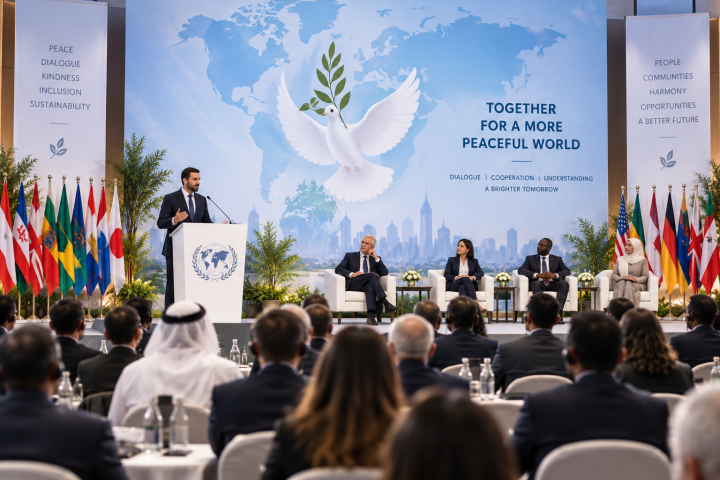
Education is one of the most effective instruments for creating peaceful and resilient communities. It teaches people how to communicate, recognize differences, solve problems, and collaborate, in addition to providing academic information. Education can help to promote long-term peace in communities across Africa with various cultures, languages, histories, and experiences.
An African conference for the promotion of peace can bring together leaders, educators, community representatives, researchers, and organizations to debate practical strategies for building more peaceful societies. Education can help achieve these goals by transforming ideas addressed at peace conferences into long-term community-level action.
Peace education can help children and young people learn why cooperation, respect, and peaceful communication are important. Rather than focusing just on avoiding conflict, peace education can educate students how to resolve conflicts constructively.
Communication skills, empathy, teamwork, tolerance, and problem-solving are among the topics covered in lessons. These talents can be applied both within and outside of the classroom.
When young people learn to listen to diverse points of view and express their own in a courteous manner, they develop habits that can help to build better communities.
Cultural and socioeconomic differences might lead to misconceptions. Education offers pupils the opportunity to learn about many communities, traditions, languages, and history.
Schools can host cultural exchange activities, conversations, community initiatives, and instructional events to encourage students to learn from one another. These interactions can help decrease prejudices and foster a stronger awareness for diversity.
When these concepts are incorporated into daily teaching, the aims expressed at an African conference for the promotion of peace can be strengthened.
Young people are more than just future leaders; they can help build peace today. Educational institutions can create areas for students to explore social issues and build their own solutions for improving their communities.
Debates, student councils, youth forums, volunteer projects, and community initiatives can all assist young people gain confidence and leadership abilities.
When kids are encouraged to participate in important debates, they realize that their thoughts and actions may have an impact. This can drive children to become responsible members of their communities.
Critical thinking is another essential component of peace education. People in today's digital environment are exposed to a wealth of information via social media, websites, videos, and messaging apps.
People who lack the ability to critically analyze information are more likely to believe and disseminate erroneous stuff. Education may educate pupils how to verify sources, identify misinformation, evaluate alternative viewpoints, and think before acting.
These abilities can assist to minimize the spread of harmful messages and promote more responsible communication, especially during times of societal tension.
Disagreements are a regular occurrence in human relationships. The essential question is how these differences are resolved.
Education can teach students about peaceful dispute resolution techniques like active listening, negotiation, mediation, compromise, and respectful discussion. These abilities can be honed through classroom exercises and real-world community projects.
A student who learns how to handle a conflict constructively may apply those abilities to family relationships, companies, community organizations, and future leadership responsibilities.
Teachers have a tremendous impact on how young people perceive cooperation and diversity. Giving educators the necessary training can help them build inclusive classrooms in which children feel respected and heard.
Teachers might also find opportunities to foster teamwork among students from various backgrounds. Group projects, conversations, and community activities can transform peaceful collaboration into a practical experience rather than a theoretical concept.
Educators can thus play a significant role in spreading the message of an African conference for the promotion of peace beyond the event itself.
Peacebuilding is strengthened when schools collaborate with parents, community leaders, civil society organizations, and local institutions.
Tolerance, civic duty, cultural understanding, and peaceful communication are all subjects that can be addressed through community-based educational initiatives. These initiatives can reach people outside of regular classroom settings and provide opportunity for people of all ages to participate.
Such partnership can assist guarantee that peace education is responsive to the real needs and experiences of local communities.
Education can also help to promote inclusive peacebuilding by allowing women and girls to engage in leadership and community decision-making.
When educational opportunities are available to everybody, more people can get the information and skills they need to contribute to their communities. Diverse perspectives can bring unique experiences and ideas to debates about peace and development.
Inclusive education can thus contribute to a more comprehensive and representative approach to peacebuilding.
Peace conferences can spark valuable ideas, but enduring change necessitates ongoing efforts after the gathering. Educational programs provide one way to put those ideals into action.
Conference attendees can partner with schools, universities, youth groups, and community organizations to create seminars, awareness campaigns, research projects, and peace education initiatives.
This establishes a link between high-level debates and daily realities. Over time, these initiatives can assist to create communities that are better prepared to resolve conflicts amicably.
The goals of an African conference for the promotion of peace can be supported by education in a significant way. Education can assist equip individuals to contribute to peaceful communities by teaching tolerance, critical thinking, communication, dispute resolution, cultural understanding, and responsible leadership.
Peacebuilding has the greatest impact when it goes out to local communities. By connecting conferences with schools, educators, youth, families, and communities, key peace concepts can become long-term initiatives and practices.
Education cannot solve all problems, but it may provide the knowledge, skills, and understanding required to create a more cooperative and peaceful future.