Posted by Topallimpex machine
Filed in Shopping 2 views
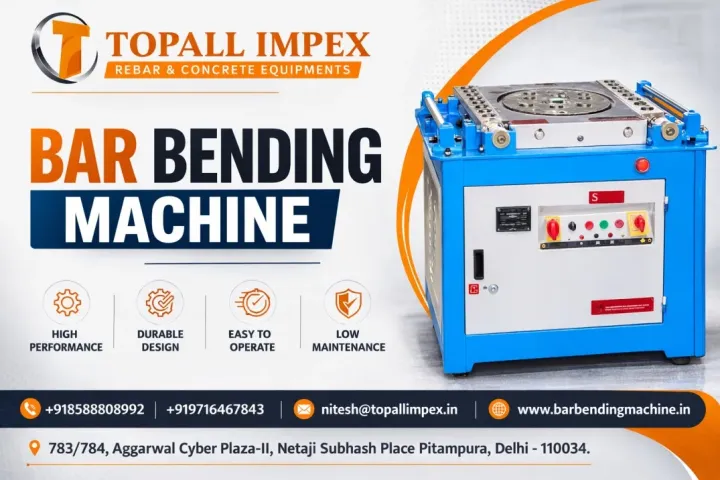
Reinforcement bars, commonly known as rebars, are essential components of modern construction. They provide strength and stability to structures such as buildings, bridges, roads, tunnels, foundations, and industrial facilities. However, rebars often need to be bent into specific shapes and angles before they can be used. This is where a bar bending machine plays an important role.
A bar bending machine is designed to bend reinforcement steel accurately, consistently, and efficiently according to project requirements. Compared with manual bending methods, these machines can improve productivity, reduce physical effort, minimize material wastage, and deliver more consistent results.
With different machine designs and technologies available today, selecting the right type can be challenging. Understanding the major types of bar bending machines and their applications can help contractors, fabricators, and construction companies make an informed decision.
A bar bending machine is construction equipment used to bend steel reinforcement bars into predetermined angles and shapes. Depending on the machine model, it can handle different bar diameters and bending requirements.
Modern machines typically use electric motors, gear systems, control panels, bending discs, rollers, and specialized tools to perform precise bending operations. Advanced models may also include programmable controls that allow operators to produce multiple bending shapes with greater accuracy.
The right machine depends on factors such as bar diameter, production volume, required bending shapes, automation level, available workspace, and project requirements.
Manual bar bending machines are among the simplest solutions for bending reinforcement bars. They generally require an operator to position the bar and manually control the bending process.
These machines are suitable for smaller construction projects and applications where bending requirements are limited. They are relatively simple to operate and may require less initial investment than automated equipment.
Manual bar bending machines are commonly used for:
While manual machines can be useful for low-volume work, they may not be the best option for projects requiring high production rates or complex bending patterns.
Automatic bar bending machines are designed to improve productivity and reduce manual intervention. Once the required settings are configured, the machine can perform bending operations with greater speed and consistency.
These machines are particularly useful for construction companies handling medium- to high-volume reinforcement work. Automated operation can also help reduce operator fatigue and improve production efficiency.
Automatic bar bending machines are widely used in:
Their combination of productivity and accuracy makes them a popular choice for professional construction applications.
CNC, or Computer Numerical Control, bar bending machines represent a more advanced category of reinforcement processing equipment. These machines use computerized controls to manage bending operations according to programmed specifications.
CNC technology allows operators to produce complex shapes and repeat the same bending pattern with a high level of consistency. This can be especially valuable when a project requires large quantities of identical reinforcement components.
CNC bar bending machines are suitable for:
For companies managing demanding production schedules, CNC machines can provide excellent control over repetitive bending operations.
Hydraulic bar bending machines use hydraulic power to generate the force required to bend reinforcement bars. They are generally designed for demanding applications where substantial bending force is required.
Hydraulic systems can provide smooth and powerful operation, making these machines suitable for heavier reinforcement bars and industrial applications.
Hydraulic bar bending machines can be used for:
The machine's capacity should always be selected according to the diameter, grade, and type of reinforcement bar being processed.
Electric bar bending machines use an electric motor to drive the bending mechanism. They are widely used because they offer a practical balance between operating efficiency, control, and ease of use.
These machines are available in different capacities and configurations, allowing users to select equipment according to their production requirements.
Electric bar bending machines are commonly used in:
They are particularly useful for contractors looking for a dependable machine for regular bending operations.
Portable bar bending machines are designed for flexibility and easy movement between work locations. Their compact design can be beneficial when reinforcement needs to be processed directly at different areas of a construction site.
Instead of transporting all reinforcement bars to a centralized fabrication facility, contractors may use portable equipment for certain on-site bending requirements.
Portable bar bending machines can be useful for:
Portability can help reduce material handling and improve convenience when site conditions change frequently.
Choosing the right bar bending machine requires more than comparing prices. The machine should match the project's technical and production requirements.
The first factor to evaluate is the maximum and minimum bar diameter the machine can process. Selecting a machine with insufficient capacity can affect performance and may lead to equipment damage.
For low-volume work, a basic machine may be sufficient. High-volume fabrication generally requires an automatic or CNC machine capable of producing consistent bends quickly.
Projects with strict reinforcement specifications require accurate bending. Look for machines capable of maintaining consistent angles and repeatable results.
Automation can reduce manual intervention and improve productivity. CNC machines may be particularly beneficial when a project involves large quantities of repeated or complex bending patterns.
Construction machinery operates in demanding environments. A durable machine with readily available spare parts and reliable technical support can help reduce unexpected downtime.
Before purchasing, check electrical requirements, machine dimensions, operating space, and site conditions. Portable or compact equipment may be preferable where workspace is limited.
Selecting the appropriate machine can provide several advantages. Automated and precision bending can reduce manual labor requirements while improving consistency. Faster processing can also help contractors meet demanding project schedules.
Accurate bending can reduce errors, rework, and unnecessary material consumption. In addition, mechanical bending can improve workplace safety by reducing the amount of physical effort required from workers.
For businesses handling regular reinforcement fabrication, the right machine can also improve overall production efficiency and contribute to better long-term operating costs.
Bar bending machines are available in several types, including manual, automatic, CNC, hydraulic, electric, and portable models. Each type is designed to address different production requirements and construction applications.
The ideal choice depends on factors such as bar diameter, production volume, bending accuracy, automation, project size, workspace, and budget. Small projects may benefit from simple or portable equipment, while large infrastructure and high-volume fabrication operations may require automatic or CNC solutions.
Understanding these machine types before making a purchase can help construction companies select equipment that delivers reliable performance, consistent bending quality, and improved productivity. For long-term value, buyers should also consider machine durability, maintenance requirements, spare parts availability, warranty, and after-sales technical support.
Choosing the right bar bending machine is ultimately an investment in efficient reinforcement processing. With the right equipment, construction businesses can streamline rebar fabrication, reduce manual effort, and maintain the accuracy required for modern construction projects.