Posted by Betty Cooper
Filed in Business 17 views
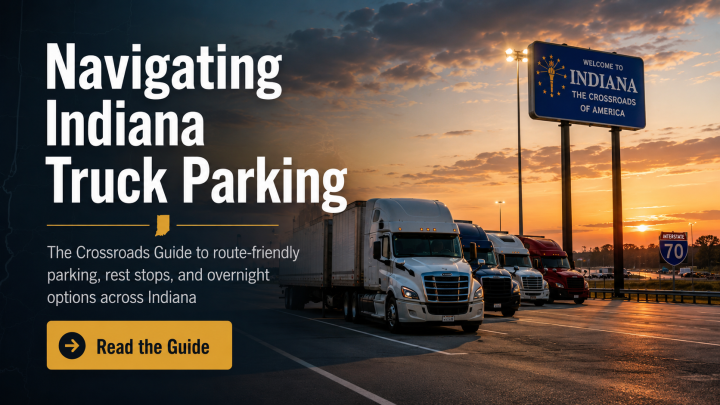
Finding reliable rest stops in the Crossroads of America requires strategy, planning, and local knowledge. Indiana connects the East Coast to the Midwest and beyond, funneling massive freight volumes through its borders every single day. With thousands of commercial vehicles sharing the road, securing a safe place to rest often becomes a race against the clock.
This comprehensive guide explores everything you need to know about commercial truck parking in Indiana. We will examine the best private truck stops along major interstates, break down the rules for state-run rest areas, and tackle the specific parking challenges found in major urban hubs like Indianapolis and Gary. You will also learn about crucial safety regulations, the benefits of utilizing reservation systems, and how real-time parking apps can eliminate the stress of route planning.
Indiana earned its nickname, the "Crossroads of America," for a good reason. The state boasts more pass-through highways than almost any other state in the country. This geographic advantage makes it a powerhouse for logistics, but it also creates immense pressure on existing infrastructure and parking availability.
Four primary arteries carry the bulk of this freight: I-65, I-70, I-80/90 (the Indiana Toll Road), and I-94. Each of these routes presents unique challenges and opportunities for drivers seeking legal parking spots. Planning your stops around these specific corridors ensures you maintain compliance with Hours of Service (HOS) regulations while keeping your cargo secure.
Private truck stops remain the most reliable option for drivers who need comprehensive amenities, including hot showers, maintenance services, and reliable food options. Indiana features numerous large-scale facilities tailored to commercial fleets.
Interstate 65 runs vertically through the state, connecting Chicago to Louisville, while Interstate 70 cuts horizontally, linking Illinois to Ohio. The intersection of these two massive routes near Indianapolis creates a high demand for secure overnight truck parking.
Major chain operators like Pilot Flying J, Love’s Travel Stops, and TA-Petro operate massive facilities along these routes. For example, the TA in Knightstown along I-70 offers extensive parking spaces, full-service dining, and repair shops. Drivers traveling along I-65 frequently utilize the stops in Whiteland and Seymour, which provide hundreds of clearly marked, well-lit spaces designed for maximum maneuverability.
The northern section of Indiana experiences heavy congestion due to freight moving in and out of the Greater Chicago area and Michigan. The Indiana Toll Road (I-80/90) features travel plazas situated conveniently in the median, allowing access from both eastbound and westbound lanes. These plazas offer convenient truck parking without forcing you to navigate complex off-ramps or local roads.
Meanwhile, I-94 acts as a critical link for automotive freight. The truck stops located near Portage and Burns Harbor provide essential staging areas for drivers waiting for dock appointments in the heavily industrialized lakeshore region.
The Indiana Department of Transportation (INDOT) maintains dozens of rest areas and welcome centers across the state. These facilities provide free truck parking spaces for drivers needing a quick break or completing their mandatory rest periods.
State-run facilities typically offer fewer amenities than private stops, focusing instead on clean restrooms, vending machines, and pet exercise areas. However, they excel in providing well-maintained, easily accessible parking directly off the highway. INDOT strictly enforces safety at these locations, ensuring proper lighting and clear lane markings for heavy vehicles.
Drivers must pay close attention to posted time limits. While law enforcement generally supports drivers resting to comply with federal HOS rules, long-term staging or dropping trailers at state rest areas is strictly prohibited. Use these facilities for immediate rest rather than multi-day layovers.
Navigating urban centers requires an entirely different approach than highway cruising. City zoning laws, limited physical space, and heavy local traffic make finding parking in Indianapolis and Gary a demanding task.
As the central hub of the state, Indianapolis hosts massive distribution centers and warehouses. Unfortunately, Indianapolis truck parking within the city limits remains scarce. Many industrial parks strictly forbid parking on local streets, and local police actively ticket commercial vehicles parked in unauthorized commercial lots or retail centers.
To succeed in the Indianapolis market, drivers should stage their vehicles at truck stops outside the I-465 loop. Facilities in surrounding towns like Lebanon, Plainfield, and Greenfield offer safe staging areas. Drive into the city limits only when your delivery or pickup appointment approaches.
Gary and the surrounding Northwest Indiana region serve as the gateway to Chicago. The sheer volume of freight moving through this relatively small geographic area causes severe congestion. Drivers often use this region to park before tackling the strict regulations and scarce parking of Illinois.
Finding safe truck parking in Gary requires advance planning. Rely on massive private travel centers in nearby Hammond, Lake Station, and Chesterton. Due to high cargo theft risks in densely populated industrial zones, always prioritize well-lit, fenced, or security-monitored lots when resting in Northwest Indiana.
Maintaining a clean driving record means understanding and following Indiana's specific transportation regulations.
First, parking on highway shoulders, off-ramps, or on-ramps poses a severe danger to you and the motoring public. The Indiana State Police actively patrol these areas and will issue citations for unauthorized highway shoulder parking. You must plan your route to ensure you reach a designated rest area or truck stop before your hours expire.
Second, Indiana actively monitors vehicle emissions and noise pollution. While the state does not have a blanket statewide idling ban, many local municipalities enforce strict truck idling laws. To avoid fines, utilize auxiliary power units (APUs) or bunk heaters whenever possible. If you must idle to maintain a safe cab temperature during extreme weather, ensure you park away from residential neighborhoods and adhere to posted signage.
Relying on physical maps and memory no longer suffices in modern logistics. Technology provides the most effective weapon against the chronic parking shortage.
Using real-time parking apps allows you to see live availability updates from other drivers on the road. Platforms like Semiyard offer crowdsourced data that highlights which rest areas are full and which still have open spaces.
Furthermore, major truck stop chains now offer robust reservation systems. You can secure and pay for reserved truck parking days in advance through mobile apps. While paying for parking might seem frustrating, guaranteeing a safe, legal spot during peak hours eliminates route anxiety and prevents costly HOS violations. Third-party logistics platforms and independent yard networks are also expanding across Indiana, providing alternative paid staging areas for fleets operating on tight schedules.
How long can I park at an Indiana state rest area?
Indiana generally expects drivers to use rest areas for temporary relief. While specific time limits can vary by location and are posted on-site, law enforcement usually accommodates drivers completing their federally mandated 10-hour rest break. Extended staging or dropping trailers is not permitted.
Are there paid parking options near Indianapolis?
Yes. Several large travel centers just outside the I-465 loop offer paid, reservable spots. Additionally, private logistics yards and third-party parking networks operate secure, gated lots specifically designed for commercial fleets needing overnight or multi-day storage in the Indianapolis area.
Does Indiana strictly enforce idling laws?
While Indiana lacks a singular statewide idling ban for commercial trucks, many cities and counties enforce local ordinances to control noise and emissions. It is always best practice to use an APU or limit engine idling whenever parked in urban or residential zones.
Is it safe to park overnight in Northwest Indiana?
Northwest Indiana handles extreme freight volumes, which can attract cargo theft. To ensure safety, always park in well-lit, designated commercial lots, utilize steering wheel locks, and verify that your trailer doors are secured with heavy-duty padlocks. Avoid parking on unlit side streets or abandoned lots.
Mastering the Indiana freight network requires a proactive approach to route management. By understanding the layout of major corridors like I-65 and I-70, identifying reliable private stops, and respecting state regulations, you can navigate the Crossroads of America with confidence.
Always plan your stops before turning the ignition. Leverage reservation systems for peace of mind, utilize real-time apps to adapt to changing conditions, and avoid the trap of urban street parking in congested cities like Indianapolis and Gary. Protecting your cargo, your license, and your well-being starts with knowing exactly where you will park at the end of your shift.